
The Benefits of Using .NET for Enterprise Application Development
Choosing the right framework for enterprise application development is a critical decision that impacts scalability, performance, and long-term maintenance. With numerous options available, making an informed choice requires a deep dive into technical capabilities and ecosystem support.
In this article, we’ll analyze why the .NET framework remains a top contender for enterprise-grade solutions. You’ll learn:
- How .NET ensures high performance and scalability for large-scale systems.
- The security features that make it suitable for regulated industries like finance and healthcare.
- Integration capabilities that streamline development within existing tech stacks.
- Real-world benefits, including cost efficiency and cross-platform versatility.
Unmatched Performance and Scalability
For enterprise applications, performance isn’t just a nice-to-have; it’s a requirement. High-performance computing is essential when dealing with massive datasets or high-traffic user bases.
Optimized for Speed
The modern iteration of .NET (.NET Core and .NET 5+) is engineered for speed. It consistently ranks high in benchmarks for server-side performance. Its Just-In-Time (JIT) compilation optimizes code execution at runtime, ensuring that applications run efficiently regardless of the underlying hardware. For developers accustomed to Python or other interpreted languages, the raw execution speed of C# and .NET can offer a significant boost in throughput.
Scalable Solutions for Growing Demands
Scalability is a core concern for any enterprise project. Whether you are building microservices or a monolithic architecture, .NET provides robust support.
- Horizontal Scalability: Easily distribute loads across multiple servers.
- Microservices Architecture: With built-in support for Docker and Kubernetes, deploying scalable AI solutions or standard web services becomes seamless.
This capability allows businesses to start small and expand effortlessly as data volume and user demand increase, ensuring that the infrastructure grows in tandem with the business.
Robust Security Features
Security is non-negotiable in sectors like finance and healthcare. .NET offers a comprehensive suite of security features that help developers build secure applications from the ground up.

Built-in Protection
The framework includes built-in protection against common vulnerabilities such as SQL injection, Cross-Site Scripting (XSS), and Cross-Site Request Forgery (CSRF). The managed runtime environment also handles memory management, reducing the risk of buffer overflows and memory leaks that can lead to security exploits.
Identity and Access Management
Integration with authentication protocols is straightforward. .NET supports:
- OAuth and OpenID Connect: Essential for modern, secure token-based authentication.
- Active Directory: Seamless integration for internal enterprise apps requiring role-based access control.
These features allow development teams to focus on business logic rather than reinventing the wheel for security protocols.
Seamless Integration and Interoperability
In an enterprise environment, no application lives in a vacuum. It must communicate with existing systems, databases, and third-party services.
Cross-Platform Capabilities
Gone are the days when .NET was strictly for Windows. Today, it is fully cross-platform, running on Windows, Linux, and macOS. This is particularly beneficial for teams that prefer Linux-based cloud environments for deployment to reduce licensing costs.
Extensive Ecosystem
The .NET ecosystem allows for seamless integration with:
- Cloud Services: Native support for Azure ensures that deploying cloud-based solutions is efficient, though it works well with AWS and Google Cloud too.
- Data Sources: Robust libraries (like Entity Framework) make interacting with structured SQL databases and unstructured NoSQL data sources intuitive.
- AI and ML Integration: For the AI-focused developer, ML.NET allows you to integrate machine learning models directly into your .NET applications without needing to switch completely to Python-based environments.
Efficiency and Maintainability
Developing an enterprise application is a long-term investment (often 3-6 months minimum for initial phases, with years of maintenance). The maintainability of code is paramount.
Strong Typing and Tooling
C# is a strongly typed language, which helps catch errors at compile-time rather than runtime. This feature, combined with powerful IDEs like Visual Studio, dramatically increases developer productivity and reduces the bug count in production.
Modular Design
The framework encourages modular design patterns. By breaking down applications into manageable components or microservices, teams can work on different parts of the system simultaneously without stepping on each other’s toes. This supports agile development methodologies and faster release cycles.
Cost-Effectiveness and ROI
Budget allocation is always a key trigger for decision-making. While proprietary tools can be expensive, .NET (specifically .NET Core and later) is open-source.
Lower Operational Costs
- Licensing: Being open-source reduces licensing fees associated with older frameworks.
- Hosting: The ability to host on Linux servers can significantly cut infrastructure costs compared to Windows-only hosting.
Long-Term Viability
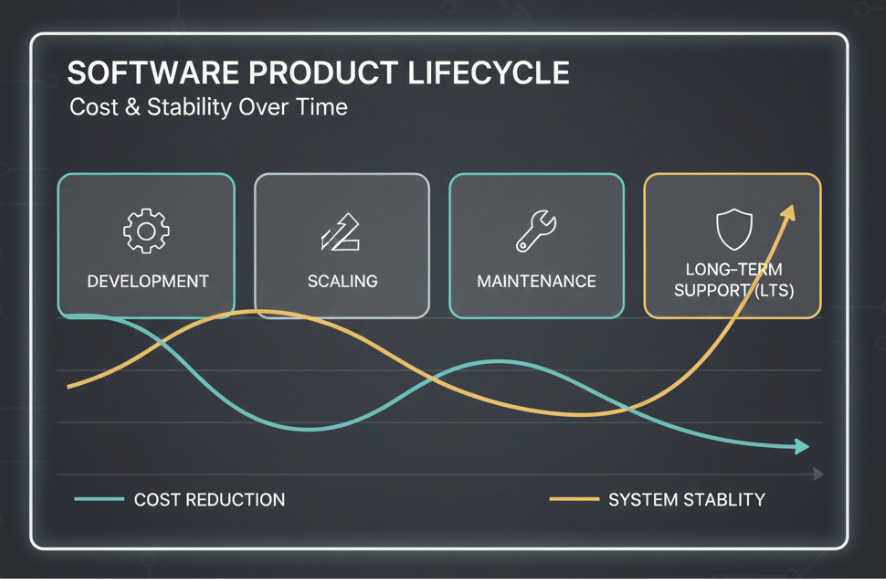
Microsoft’s backing ensures long-term support (LTS) releases, providing enterprise stability. You won’t have to worry about the framework becoming obsolete overnight, protecting your investment.
Conclusion: Is .NET Right for Your Next Project?
If your goal is to build secure, scalable, and high-performance applications that integrate seamlessly with a diverse tech stack, .NET is a compelling choice. It offers the robust tooling required for complex enterprise environments while providing the flexibility needed for modern, cloud-native development.
For teams looking to optimize their development process and deploy reliable, scalable solutions, moving to .NET could be the strategic advantage you need.

 Print on Demand Cloud
Leave a comment