
How to Choose the Right Software Development Methodology for Your Team
Every software project begins with a spark of an idea but turning that spark into a functional product requires a roadmap. This roadmap is your methodology. Choosing the wrong path can lead to blown budgets, missed deadlines, and frustrated developers. Choosing the right one can streamline your workflow, boost morale, and deliver a superior product.
With so many frameworks available, finding the perfect fit for your specific needs can feel overwhelming. Should you stick to a rigid structure or embrace flexibility? Do you need rapid iteration or comprehensive documentation?
This guide breaks down the most popular approaches in software engineering. We will explore how to align your choice with your team size, project scope, and business goals to ensure your development application process is a success.
Understanding the Basics: What is SDLC?
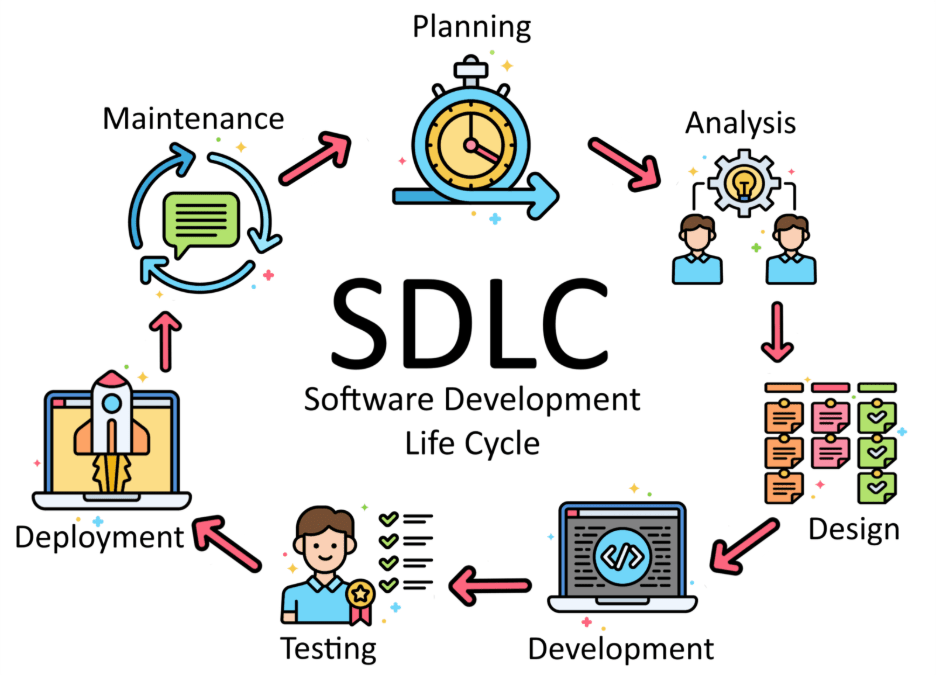
Before diving into specific methodologies, we must touch on the foundation: the SDLC (Software Development Life Cycle). This is the structured process used to design, develop, and test high quality software. Whether you are a solo freelancer or a large software development company, the SDLC provides the framework for planning, creating, testing, and deploying information systems.
The methodology you choose dictates how you move through the SDLC stages. Some methods move linearly, while others cycle through stages repeatedly.
The Classics vs. The Modern Approaches
The debate often centers on two main contenders: Waterfall methodology and Agile methodology. However, hybrid approaches and cultural shifts like DevOps have added nuance to the conversation.
1. Waterfall Methodology: The Linear Standard
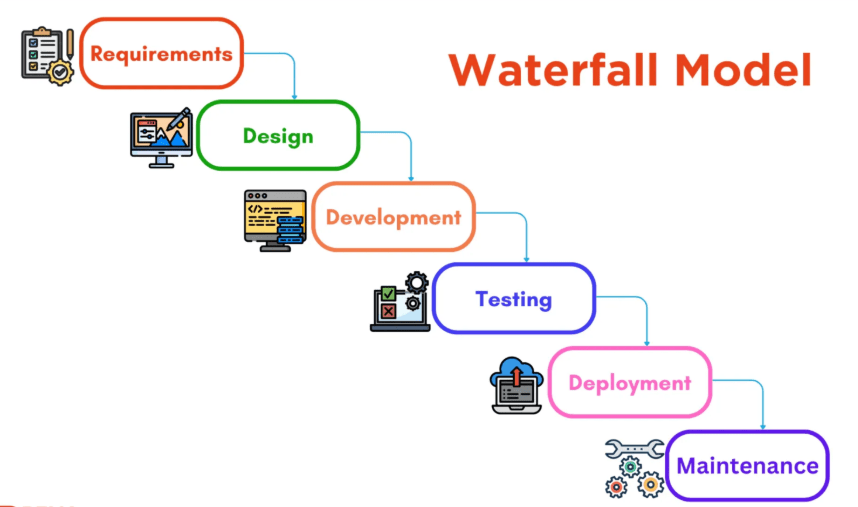
Waterfall is the traditional approach to project management. It follows a sequential, linear process. You complete one phase entirely before moving on to the next.
How it works:
- Requirements Gathering: Clearly document all business, functional, and technical requirements before development begins.
- Design: Define the system architecture, workflows, database structure, and user interface based on approved requirements.
- Development (Implementation): Write and integrate the code according to the finalized design specifications.
- Testing (Verification): Test the application to identify defects and ensure it meets the documented requirements.
- Deployment: Release the tested software into the production environment for end users.
- Maintenance: Monitor performance, fix bugs, and implement updates or enhancements as needed.
When to use it:
Waterfall works best when requirements are clear, fixed, and unlikely to change. For industries with strict regulatory compliance like healthcare or aerospace computer science software engineering projects the heavy documentation and predictability of Waterfall are advantageous.
Pros:
- Clear milestones and deadlines.
- Easy to manage due to its rigidity.
- Comprehensive documentation is built in.
Cons:
- Inflexible changes once development starts.
- Testing happens late in the game, making bug fixes expensive.
- The client doesn’t see the product until the end.
2. Agile Methodology: Flexibility First
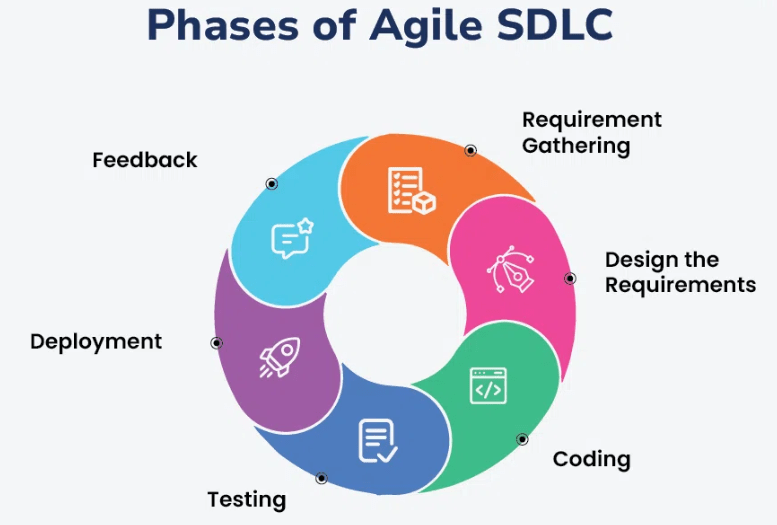
Agile software development emerged as a response to the rigidity of Waterfall. It prioritizes customer collaboration, working software, and responsiveness to change over strict planning.
How it works:
Agile breaks projects into small, manageable units called iterations or sprints. At the end of each sprint, the team reviews their work and adjusts plans for the next cycle. This allows for continuous feedback and improvement.
When to use it:
If you are building a new product where market fit isn’t 100% clear, Agile is superior. It is the go-to for startups and bespoke software development services where clients need to evolve rapidly.
Pros:
- High adaptability to changing requirements.
- Frequent delivery of working software keeps clients happy.
- Issues are identified and resolved quickly.
Cons:
- Scope creep is a real danger without strict management.
- Less emphasis on documentation can cause knowledge gaps later.
- Requires high client involvement.
3. Scrum: Structuring the Chaos
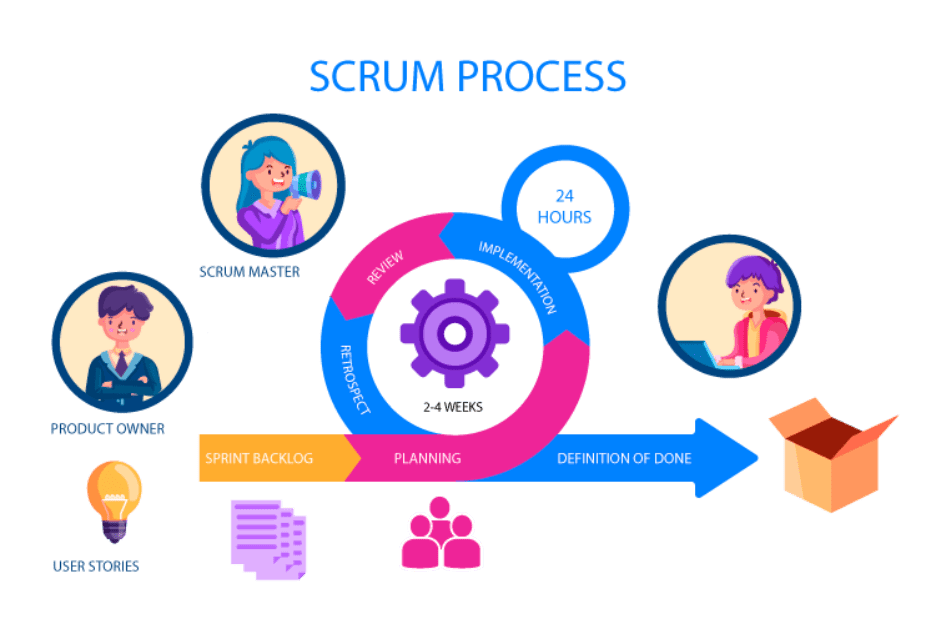
Scrum is not a standalone methodology but a specific framework for implementing Agile. It provides rules and roles like the Scrum Master and Product Owner to facilitate Agile project management.
How it works:
Scrum organizes work into short, time boxed sprints (usually 2-4 weeks). Daily stand-up meetings keep everyone aligned. At the end of a sprint, the team holds a retrospective to discuss what went well and what didn’t.
When to use it:
Scrum is ideal for teams of 3 9 people working on complex products. It offers enough structure to keep Agile from becoming chaotic while maintaining flexibility.
4. DevOps: Bridging the Gap
DevOps is less of a methodology and more of a cultural shift that combines software development (Dev) and IT operations (Ops). The goal is to shorten the systems development life cycle and provide continuous delivery with high software quality.
How it works:
DevOps emphasizes automation, real time monitoring, and collaboration. It tears down the “silos” between the developers who write the code and the operations staff who deploy and maintain it.
When to use it:
If your goal is rapid deployment and high reliability, adopt DevOps practices. It is essential for SaaS platforms and app and software development where updates are pushed frequently.
Factors to Consider When Choosing
Selecting a methodology isn’t just about picking the most popular buzzword. You must analyze your unique situation.
Team Size and Expertise
- Small Teams: Agile and Scrum work wonders here. Communication is easy, and small teams can pivot quickly. A small software company development team can thrive on the lack of bureaucracy.
- Large Teams: As teams grow, communication becomes harder. While “Scaled Agile” frameworks exist, larger enterprises often benefit from the structure of Waterfall or hybrid models to ensure everyone is on the same page.
Project Complexity and Requirements
- Fixed Requirements: If you are migrating a legacy system where the outcome is exactly defined, Waterfall minimizes risk.
- Undefined Requirements: If you are building a disruptive app, you don’t know what users want yet. Agile methodology allows you to discover the requirements you build.
Client Involvement
- High Involvement: Does your client want to see progress every two weeks? Agile project management facilitates this.
- Low Involvement: Does the client want to hand over a spec sheet and come back in six months for the finished product? Waterfall suits this hands-off approach.
Time to Market
If speed is the priority, Agile allows you to release a “Minimum Viable Product” (MVP) quickly and iterate. Waterfall generally requires the entire product to be finished before release, delaying the time to market.
Making the Decision for Your Software Company
There is no “one size fits all” in software development. Many modern teams use a hybrid approach. For example, they might use Waterfall for the high-level planning and design phases but switch to Scrum for actual execution and coding.
When evaluating bespoke software development services, ask potential partners about their methodology. Their answer will tell you a lot about how they handle pressure, changes, and deadlines.
Here is a quick checklist to help you decide:
- Is the project’s scope clearly defined? (Yes = Waterfall / No = Agile)
- Is technology new to the team? (Yes = Agile/Spike solutions / No = Waterfall)
- Does the client need to be involved daily? (Yes = Agile / No = Waterfall)
- Is rapid delivery more important than perfect documentation? (Yes = DevOps/Agile / No = Waterfall)
Conclusion
The “best” methodology is the one that empowers your team to deliver value efficiently. Whether you choose the structured path of Waterfall methodology, the iterative freedom of Scrum, or the automated efficiency of DevOps, the key is consistency.
Ensure that every member of your team understands the chosen process. A methodology only works if the people behind it believe in it. By carefully weighing your project’s needs against these frameworks, you position your team for success in the competitive world of software engineering.

 Print on Demand Cloud
Leave a comment