
How to Build Scalable Software Applications: Best Practices
Imagine launching a new app that instantly goes viral. Thousands of user’s floods within hours. It’s every founder’s dream, right? But if your backend crumbles under the pressure and your app crashes, that dream quickly becomes a nightmare. This is why scalability isn’t just a buzzword; it is the backbone of successful application development.
Building software that can grow with your business requires foresight. It demands a blend of strategic planning and technical excellence. Whether you are a startup founder or part of a large software development company, understanding how to architect for growth is crucial.
In this guide, we will explore the core principles of scalability. We will cover actionable strategies to ensure your app development efforts result in robust, future-proof solutions.
What is Scalability in Software Engineering?
Scalability refers to a system’s ability to handle growing amounts of work. This could mean accommodating more users, processing more data, or managing higher transaction volumes without sacrificing performance.
In the world of software engineering, scalability is often categorized into two types:
- Vertical Scaling (Scaling Up): Adding more power (CPU, RAM) to your existing server. It’s like upgrading a car’s engine to go faster.
- Horizontal Scaling (Scaling Out): Adding more machines to your pool of resources. This is like building a fleet of cars to transport more people.
For a modern software engineering company, horizontal scaling is usually the preferred method for cloud-based applications because it offers greater flexibility and reliability.
Best Practices for Scalable Application Development
Achieving true scalability requires more than just throwing money at servers. It starts with the code and architecture. Here are the best practices trusted by top app developers.
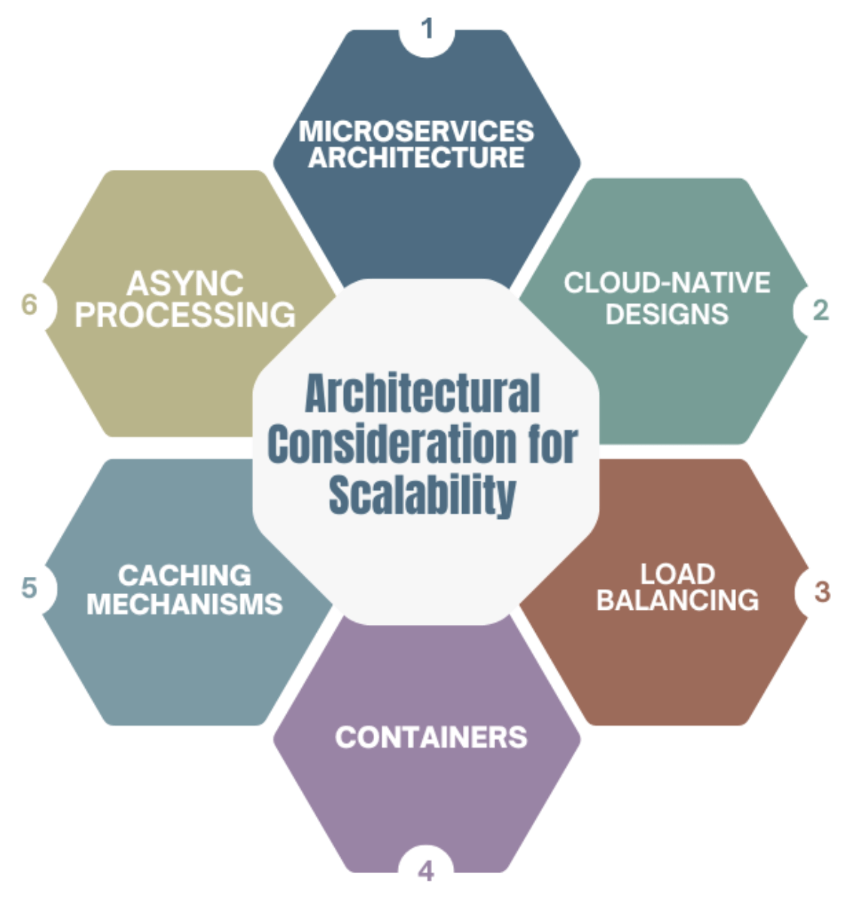
1. Adopt a Microservices Architecture
Gone are the days when monolithic applications are the standard. In a monolith, all components are interconnected, and a single failure can bring down the entire system.
Modern application development favors microservices. This approach breaks your software into independent, small services that communicate over a network.
- Benefits: Each service can be scaled independently. For instance, if your authentication service faces heavy traffic, it can scale without affecting other services like product catalogs.
- Implementation: Essential for any software or mobile app development company aiming to build resilient, flexible, and easily maintainable backends.
2. Prioritize Cloud-Native Designs
Cloud platforms like AWS, Google Cloud, and Azure offer dynamic resources that can be adjusted based on application demand. This allows developers to focus on features rather than infrastructure management.
- Auto-scaling: Automatically adds or removes resources depending on traffic, ensuring cost efficiency while maintaining performance.
- Global Reach: Cloud providers operate worldwide, so you can deploy your application close to users for faster response times.
- Implementation: Critical for building scalable, reliable, and globally accessible applications without heavy upfront infrastructure costs.
3. Implement Load Balancing
User traffic can be unpredictable. Sending all requests to a single server can cause slowdowns or crashes.
Load balancing distributes incoming requests across multiple servers or instances. Algorithms like round-robin, least connections, or weighted distribution ensure optimal resource use.
- Benefits: Improves availability, reduces latency, and prevents server overload. Advanced load balancers offer health checks, failovers, and SSL termination.
- Implementation: Vital for any company aiming to provide smooth, uninterrupted user experiences even during traffic spikes.
4. Use Containers for Portability
Applications often behave differently in development and production environments. Containers solve this by packaging applications with all dependencies into isolated, portable units.
- Benefits: Lightweight and fast, containers enable consistent behavior across platforms, reduce resource overhead, and support microservices adoption.
- Implementation: Using tools like Docker and Kubernetes, development teams can automate deployment, scaling, and orchestration, ensuring that apps run reliably regardless of environment.
5. Apply Caching Mechanisms
Database queries and repeated calculations can slow down applications, especially under high traffic.
Caching stores frequently access data in high-speed storage, like Redis or Memcached, reducing repeated database hits.
- Benefits: Faster response times, lower database load, and improved system scalability.
- Implementation: This is crucial for any web or mobile application development company aiming for high performance and smooth user experiences, particularly for dynamic, data-heavy apps.
6. Enable Asynchronous Processing
Users expect fast, responsive interfaces. Waiting for long-running tasks like report generation or file processing can frustrate them.
Asynchronous processing allows these tasks to run in the background while keeping the UI responsive. Message queues, event streams, or worker services handle these operations efficiently.
- Benefits: Better user experience, improved system scalability, and fault tolerance.
- Implementation: Essential for modern mobile and web apps, ensuring seamless interaction between the client and server while managing heavy workloads gracefully.
Choosing the Right Partner
Implementing these practices requires deep technical expertise. While some organizations have in-house teams, many partner with a specialized app dev company or mobile software development company.
When selecting a partner, look for a software company development team that:
- Understands the nuances of mobile application development.
- Has a proven track record in custom app development.
- Can demonstrate previous projects where they successfully scaled a product.
Don’t just look for coders; look for architects. The right app development company will challenge your assumptions and help you build a roadmap for long-term growth.
Conclusion
Building scalable software is an investment in your future success. It ensures that when your marketing efforts pay off and users arrive in droves, your technology welcomes them with open arms rather than an error screen.
By adopting microservices, leveraging the cloud, and optimizing your data handling, you set the stage for sustainable growth. Whether you are handling IT software development internally or hiring an external app development company, keeping scalability at the forefront of your strategy is non-negotiable.
Ready to build software that grows with you? Start by auditing your current architecture today.

 Print on Demand Cloud
Leave a comment