
How to Integrate AI into Your Existing .NET Applications
Artificial intelligence (AI) is transforming how we build and interact with software. For developers working within the Microsoft ecosystem, integrating AI into existing .NET applications can unlock powerful new capabilities, from predictive analytics to intelligent automation. This guide will walk you through the process, showing how you can leverage machine learning and cloud services to make your applications smarter, more efficient, and more valuable.
The world of software development is constantly evolving. AI represents the next major shift, offering a way to create applications that learn and adapt. By understanding how to integrate these technologies, you can stay ahead of the curve and deliver innovative solutions.
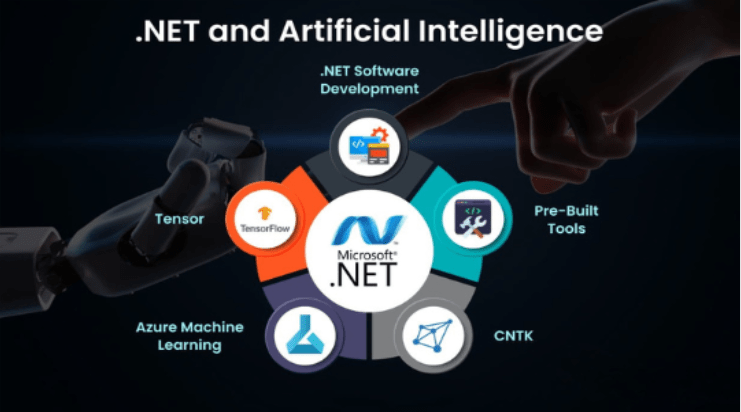
Why Integrate AI into Your .NET Applications?
Adding artificial intelligence to your .NET projects isn’t just about following a trend. It delivers tangible business benefits and enhances the user experience. By making your applications more intelligent, you can automate complex processes, uncover valuable insights from data, and create more personalized interactions for your users.
Key benefits include:
- Enhanced Decision-Making: AI algorithms can analyze vast datasets to identify patterns and make predictions, empowering users with data-driven insights.
- Improved Efficiency: Automating repetitive tasks with AI frees up human resources to focus on more strategic initiatives. This is a core principle of adaptive software development, where processes evolve based on feedback.
- Personalized User Experiences: Machine learning models can tailor content, recommendations, and user interfaces to individual preferences, significantly boosting engagement.
- Predictive Maintenance: For industrial applications, AI can predict when machinery is likely to fail, allowing for proactive maintenance and reduced downtime.
A Guide to AI Integration in .NET
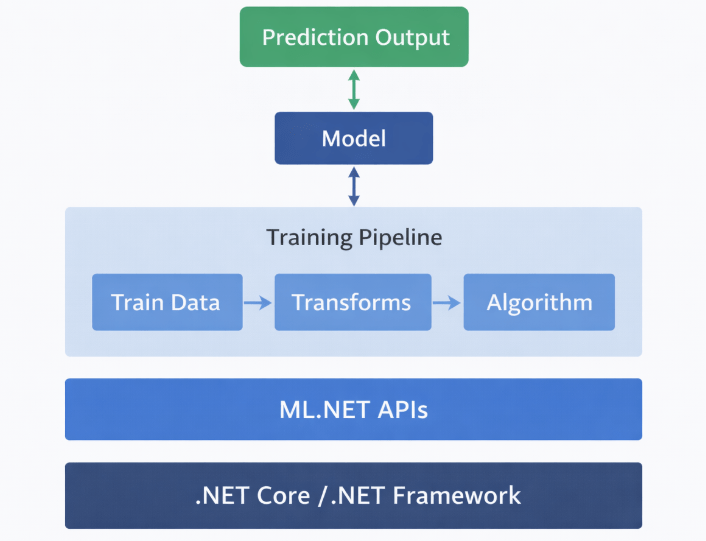
Whether you are working with the classic .NET Framework or the modern .NET Core, Microsoft provides a rich set of tools to bring AI capabilities into your projects. A software engineer can use libraries like ML.NET to build, train, and deploy machine learning models directly within the .NET ecosystem.
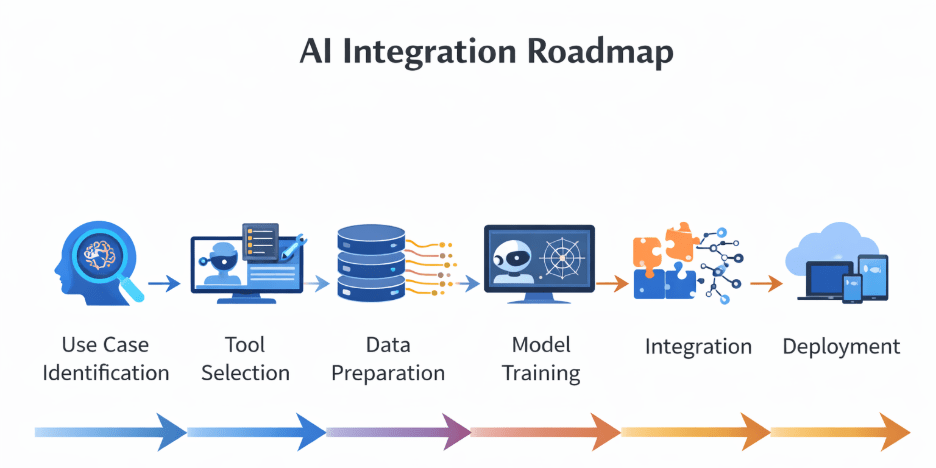
Step 1: Identify the Right Use Case
Before writing any code, determine where AI can provide the most value. Are you trying to predict customer churn? Recommend products? Detect fraudulent transactions? A clear goal is crucial for a successful AI integration. Consider areas where data-driven decisions or automation could improve your current application.
Step 2: Choose Your Tools and Frameworks
For a C# developer, the primary tool for AI is ML.NET, an open-source, cross-platform machine learning framework. It allows you to use your existing .NET skills to incorporate custom AI.
- For .NET Core Applications: ML.NET is natively compatible with .NET Core, making it the ideal choice for modern, cross-platform applications. You can build and run your models on Windows, Linux, or macOS.
- For .NET Framework Applications: ML.NET also supports the .NET Framework (including legacy versions like the dot net 3.5 framework, though newer versions are recommended). This allows you to enhance established desktop or web applications without a complete rewrite.
Step 3: Prepare and Train Your Model
AI models are only as good as the data they are trained on. This step involves gathering, cleaning, and preparing your dataset. Once your data is ready, you can use ML.NET to train a machine learning model. This process involves selecting an algorithm (e.g., for regression, classification, or clustering) and feeding it your data. This is where AI learning happens, as the model learns patterns from the information provided.
For more complex tasks, you might explore deep learning. This subset of machine learning uses neural networks with many layers to solve sophisticated problems like image recognition and natural language processing. While ML.NET has some deep learning capabilities, you might also integrate with frameworks like TensorFlow or ONNX.
Step 4: Integrate the Model into Your Application
After training, your model is ready to be consumed by your .NET application. ML.NET makes this straightforward. You can load the trained model into your application and use it to make predictions on new data. For example, a web application could take user input, pass it to the model, and display the prediction in real-time.
The Role of Cloud Services in .NET AI
While you can run models locally, cloud computing platforms offer scalability, pre-built services, and powerful infrastructure that accelerate AI development.
Microsoft Azure
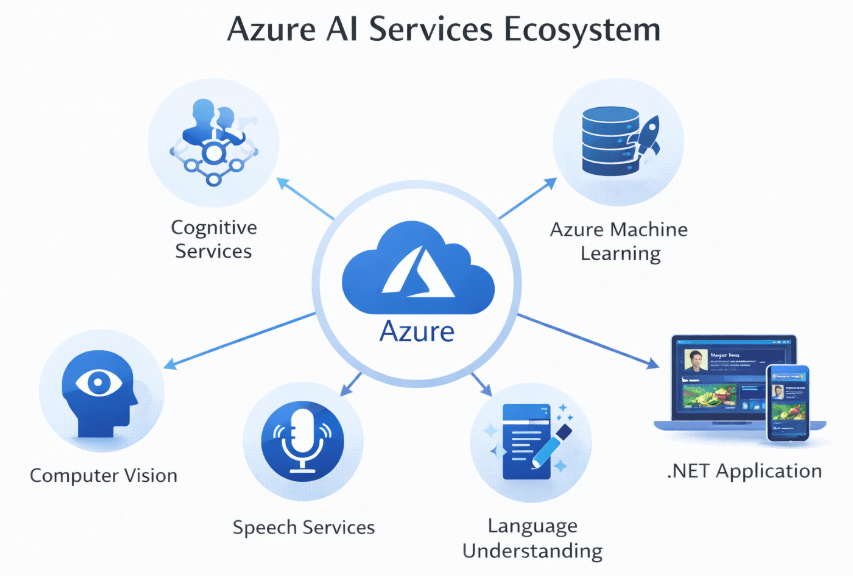
As the flagship cloud for .NET developers, Microsoft Azure offers a comprehensive suite of AI and machine learning services. Azure AI Services provide pre-built models for vision, speech, language, and decision-making that you can easily call from your .NET application via REST APIs. For custom software development, Azure Machine Learning provides a complete platform for building, training, and deploying models at scale. These cloud services handle the heavy lifting of infrastructure management.
AWS Cloud Computing
Amazon Web Services (AWS) is another major player in the cloud computing services market. AWS offers a wide range of AI services, such as Amazon SageMaker for building custom models and pre-trained APIs for common tasks. .NET developers can use the AWS SDK for .NET to seamlessly integrate these services into their applications, whether they are building a web app or focusing on mobile applications development.
Using these cloud IT services allows a software development company to focus on building features rather than managing servers, a key benefit of the software as a service (SaaS) model.
AI in Custom Software and Mobile App Development
The impact of AI extends beyond traditional desktop and web applications. In custom software development, AI enables the creation of highly specialized solutions tailored to unique business challenges. For instance, a logistics company could commission an application with an AI model that optimizes delivery routes in real-time.
Similarly, in mobile app development, AI is a game-changer. Mobile app developers can use AI to create smarter, more interactive experiences. Examples include:
- On-device machine learning for fast, offline predictions.
- AI-powered chatbots for instant customer support.
- Personalized notifications and content feeds.
Whether you are building for iOS or Android, integrating AI can make your mobile application stand out in a crowded marketplace.
The Future of AI in Software Development
The integration of artificial intelligence into software is not a passing phase; it is the future. As the technology matures, we can expect AI to become a standard component of the software development lifecycle. Concepts like deep machine learning will become more accessible, and tools will continue to simplify the integration process.
For .NET developers, now is the time to build skills in this area. By learning to integrate AI into your existing .NET Framework and .NET Core applications, you are not just modernizing your code; you are preparing for the next generation of software. The combination of your existing development expertise and the power of AI will enable you to build smarter, more capable, and ultimately more successful applications.

 Print on Demand Cloud
Leave a comment