
Introduction: The Hidden Drain on Your Logistics Profits
In the fast-paced world of logistics, efficiency is king, and every minute and every penny counts. You’re constantly looking for ways to streamline operations, cut costs, and enhance your bottom line. Yet, many organizations overlook a significant area where profits are silently being siphoned away: decentralized and inefficient print management.
If your logistics operation is still grappling with a fragmented, legacy print system, you’re not alone. The daily frustrations of printer downtime logistics, inconsistent labeling, and manual troubleshooting are more than just annoyances; they are direct assaults on your profitability. But what if there was a strategic upgrade that could deliver immediate, measurable savings?
This complete guide will explore how a move to centralized print management transforms your logistics operation from a cost center into a lean, efficient, and profitable engine. We’ll delve into the hidden costs of outdated systems and reveal how a modern WMS print integration solution like LPrinter Suite can unlock significant ROI, streamline your supply chain, and future proof your business.
The True Cost of a Decentralized, Legacy Print System
Before we discuss the solution, let’s confront the problem. Many businesses operate with disparate print setups across multiple warehouses, departments, or even countries. This traditional approach, often built on old legacy print system costs, creates a web of inefficiencies and expenses that can be shocking when totaled.
1. Excessive Printer Downtime and Maintenance Costs
Imagine a busy shipping dock, and suddenly a critical label printer goes offline. The ripple effect is immediate: parcels stack up, shipments are delayed, and delivery schedules are missed.
- Reactive Maintenance: Decentralized systems often lead to reactive maintenance fixing problems only when they occur. This means costly emergency repairs, expedited parts shipping, and dedicated IT support hours spent on troubleshooting individual printers instead of strategic tasks.

- Lack of Visibility: Without a central dashboard, monitoring printer status, toner levels, or error codes across your entire network is nearly impossible. This leads to unexpected failures and prolonged outages, directly contributing to printer downtime logistics.
2. Inefficient Label Printing and Human Error
Manual processes and inconsistent systems are breeding grounds for errors, especially in warehouse labeling.
- Incorrect Labels: Using the wrong label format for a carrier, misprinting addresses, or applying outdated product labels can lead to rejected shipments, costly rerouting, and chargebacks. These warehouse labeling errors can quickly erode profit margins.

- Redundant Workflows: Teams often spend valuable time manually selecting templates, adjusting printer settings, or even re-entering data. This isn’t just inefficient; it’s a drain on labor costs and a major productivity killer.
- Compliance Risks: Evolving regulatory requirements (e.g., GS1 standards, hazmat labels) mean that maintaining compliance across disparate print systems is a constant headache and a potential source of hefty fines.
3. High IT Overhead and Resource Drain
Managing a scattered print infrastructure places a disproportionate burden on your IT team.
- Manual Driver Updates & Installation: Deploying drivers and software updates across hundreds of individual printers is a time consuming, repetitive task.
- Security Vulnerabilities: Each decentralized printer or print server can be a potential security weak point, requiring individual patching and monitoring.
- Lack of Standardization: Different printer models, software versions, and operating systems create complexity, increasing the likelihood of compatibility issues and the overall cost of IT support.
These hidden costs collectively form a significant drag on your logistics printing costs, impacting everything from labor efficiency to customer satisfaction.
The LPrinter Suite Advantage: How Centralized Print Management Transforms Your Operations
Now, let’s pivot to the solution. Centralized print management, especially through a sophisticated platform like LPrinter Suite, directly addresses these challenges by offering a unified, intelligent approach to all your printing needs. It’s more than just software; it’s a strategic infrastructure upgrade designed to deliver tangible ROI print management.
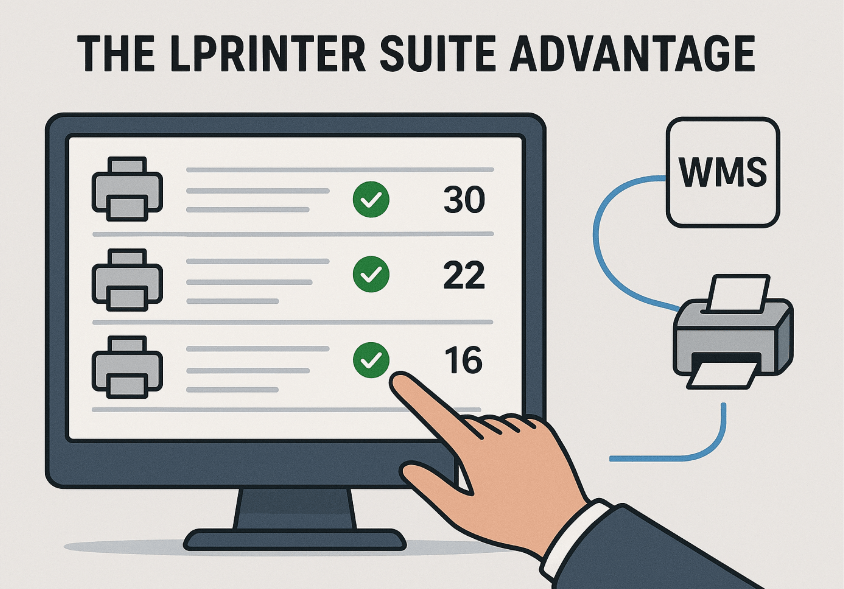
1. Streamlined Operations and Reduced Downtime
A centralized system brings all your printers under one virtual roof, giving you unprecedented control and visibility.
- Proactive Monitoring & Maintenance: LPrinter Suite provides real time insights into every printer’s status, allowing you to anticipate issues before they cause printer downtime logistics. Receive alerts for low toner, paper jams, or connectivity problems, enabling proactive intervention.
- Remote Management: IT teams can manage, configure, and troubleshoot printers remotely from a single console. This drastically reduces on-site visits and resolves issues faster, keeping your operations running smoothly.
- Automated Updates: Deploy software updates, driver installations, and security patches across your entire network simultaneously, ensuring consistency and minimizing manual effort.
2. Enhanced Accuracy and Compliance with WMS Integration
One of the most powerful features of LPrinter Suite is its seamless WMS print integration capabilities.
- Single Source of Truth: By directly connecting with your Warehouse Management System (WMS) or ERP, LPrinter Suite pulls real-time data for label generation. This eliminates manual data entry, dramatically reducing warehouse labeling errors, and ensuring that every label is accurate and up to date.
- Automated Label Compliance: With pre-configured templates for various carriers (UPS, FedEx, DHL, etc.) and industry standards (GS1, 2D barcodes), compliance is automatic. LPrinter Suite ensures that labels adhere to specific dimensions, data fields, and symbologist, avoiding costly fines and shipping delays.
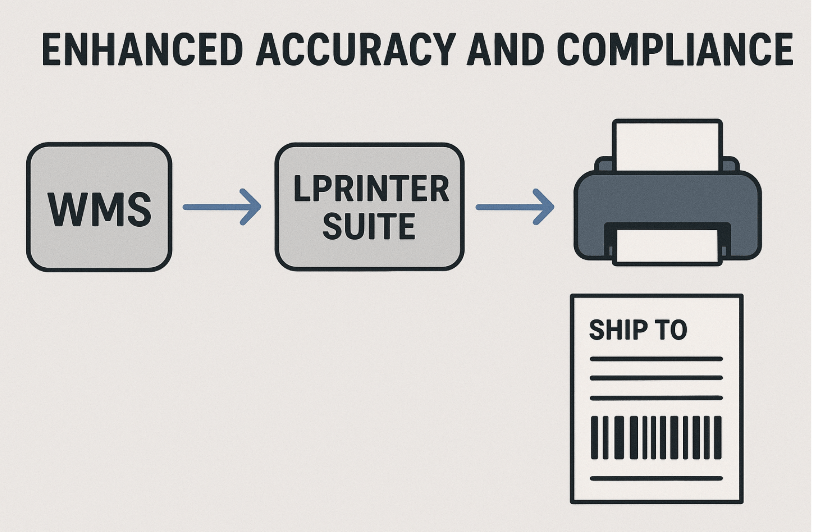
- Dynamic Label Generation: Whether it’s a shipping label, a pick ticket, a product identifier, or a hazmat warning, LPrinter Suite can generate the correct label on demand, in the right format, at the right location, every single time. This is critical for optimizing your supply chain print solution.
3. Significant Cost Savings and Resource Optimization
The cumulative effect of improved efficiency reduced errors, and streamlined IT management directly translates into logistics printing cost reduction.
- Lower Consumables Waste: Accurate printing means fewer wasted labels, ink, and toner. Proactive monitoring helps optimize consumable procurement, leading to better bulk pricing and reduced emergency orders.
- Reduced Labor Costs: Automated processes free up valuable staff time previously spent on manual labeling, troubleshooting, or rework. This allows your team to focus on higher value tasks, significantly improving overall productivity.
- Optimized Printer Fleet: With better visibility and utilization data, you can optimize your printer fleet, reducing the need for excess hardware and extending the lifespan of existing equipment. This also contributes to a more sustainable logistics operation by minimizing waste.
- Cloud Print Management Advantages: Opting for a cloud-based solution (like LPrinter Suite often offers) further reduces IT infrastructure costs, server maintenance, and provides unparalleled scalability and flexibility.
Building the Business Case for Centralized Print Management
For many organizations, the question isn’t if they should upgrade, but when and how to justify the investment. The ROI of print management is clear when you quantify the savings:
- Calculate Downtime Costs: Estimate how much each hour of printer downtime costs for your operation in terms of lost productivity, delayed shipments, and expediting fees.
- Quantify Error Costs: Track the number of mislabeled shipments, returns due to incorrect information, and compliance fines.
- Assess IT Resource Allocation: How many hours does your IT team spend on print related issues? What is the opportunity cost of that time?
- Measure Consumables Waste: Analyze your historical spending on labels, ink, and toner, factoring in waste due to reprints and incorrect formats.
By making these calculations, you’ll find that the investment in a centralized print management solution quickly pays for itself, often within months, not years. It’s a strategic move that not only fixes immediate problems but also positions your logistics operations for future growth and resilience.
Conclusion: Your Pathway to a Leaner, More Profitable Logistics Future
The demands for logistics operations are only intensifying. Relying on outdated, decentralized legacy print system costs is no longer a viable option for businesses striving for efficiency, accuracy, and profitability.

Embracing centralized print management with a robust solution like LPrinter Suite is a decisive step towards optimizing your entire supply chain. It’s about moving beyond reactive problem solving to proactive efficiency, transforming your print infrastructure into a strategic asset. By reducing logistics printing costs, minimizing printer downtime logistics, eliminating warehouse labeling errors, and ensuring seamless WMS print integration, you are not just upgrading software you are investing in a leaner, more agile, and ultimately, more profitable future for your logistics business.
Don’t let outdated print systems quietly steal your profits. It’s time to stop the bleeding and embrace the immediate, measurable savings that modern, centralized print management delivers.

 Print on Demand Cloud
Leave a comment