
Running an on-demand printing business means juggling orders from multiple platforms, managing inventory across different systems, and coordinating with shipping carriers all while ensuring customers receive accurate products on time. When your ERP system and e-commerce platforms work in isolation, you’re left manually reconciling data, risking print errors, and watching operational efficiency slip through the cracks.
Integrating your ERP with e-commerce creates a unified supply chain that connects every step from the moment a customer clicks “buy” to the moment their custom product arrives at their door. LPrinter Suite, our integrated ERP and WMS solution, eliminates data silos, automates order processing, and gives you Real-Time visibility across your entire operation.
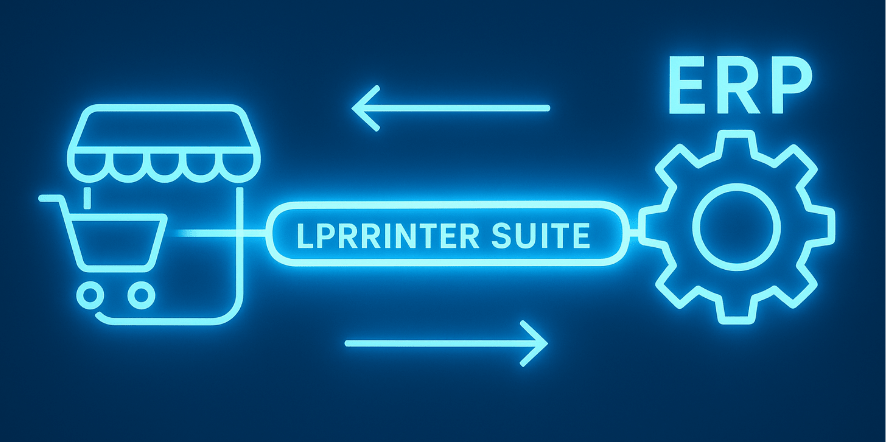
For printers receiving orders from Printify, Gelato, Redbubble, and Order Desk, this unified approach transforms how you manage print production, inventory, and fulfillment. Let’s explore how connecting your LPrinter Suite ERP to e-commerce platforms streamline operations and position your business for business growth and sustainable profitability.
Understanding ERP for E-commerce Business
An ERP (Enterprise Resource Planning) system serves as the central nervous system of your printing operation. It manages critical functions including inventory tracking, order processing, production scheduling, and financial data. When properly integrated with e-commerce platforms, your ERP becomes the single source of truth for your entire business.
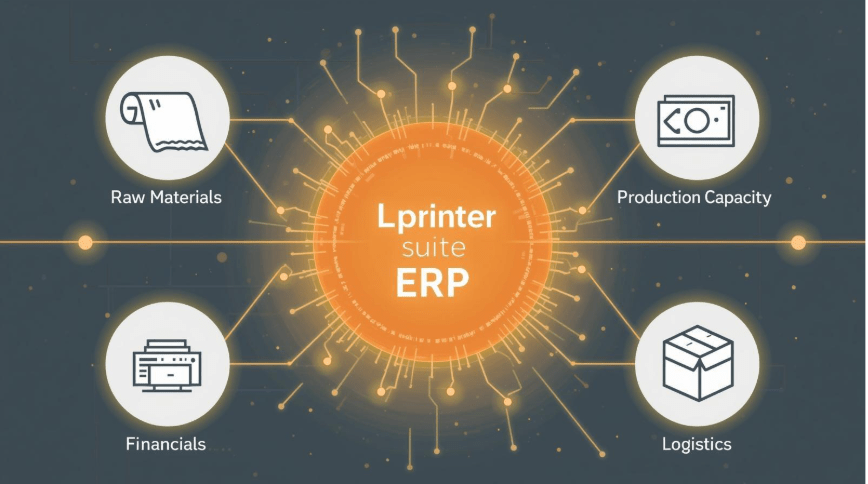
For on-demand printing businesses, an ERP designed for e-commerce handles the unique challenges of custom product fulfillment. The LPrinter Suite tracks raw materials like blank apparel and consumables, monitors production capacity across DTG, DTF, sublimation, and embroidery equipment, and coordinates with multiple order sources simultaneously.
The right ERP for e-commerce business operations doesn’t just store data; it actively coordinates between systems to ensure accurate inventory levels, efficient print workflow, and timely order fulfillment.
Why Connect LPrinter Suite ERP to E-commerce Platforms
Manual data entry between systems creates bottlenecks and introduces print errors. When you connect LPrinter Suite ERP to e-commerce platforms, information flows automatically between systems, eliminating redundant work and ensuring consistency.
Key benefits of this e-commerce integration include:
- Automatic order import: Orders from Printify, Gelato, Redbubble, and Order Desk flow directly into your production queue.
- Real-Time inventory sync: Real-Time stock levels of materials are consumed and update across all platforms.
- Unified order tracking: Monitor print production status and tracking sync from a single dashboard.
- Accurate product data: Pricing, specifications, and availability stay consistent across sales channels via automated SKU management.
- Streamlined fulfillment: Production details and shipping label generation sync automatically with carrier integration.
This connectivity transforms disconnected systems into a coordinated operation where information moves seamlessly from customer order to delivered product, achieving high operational efficiency.
Building a Unified Supply Chain from Order to Delivery
A unified supply chain connects every touchpoint in your fulfillment process. When a customer places an order on any platform, that order triggers a coordinated sequence of events across your LPrinter Suite systems.
Order Capture and Processing
The moment an order arrives from any connected platform, your integrated LPrinter Suite system springs into action. Order details including product specifications, customization requirements, and shipping preferences automatically populate your ERP without manual data entry. Your system validates the order against current inventory levels and production capacity. If materials are available and production slots are open, the order moves immediately to your Print Job Automation queue.
Inventory Management Across Systems
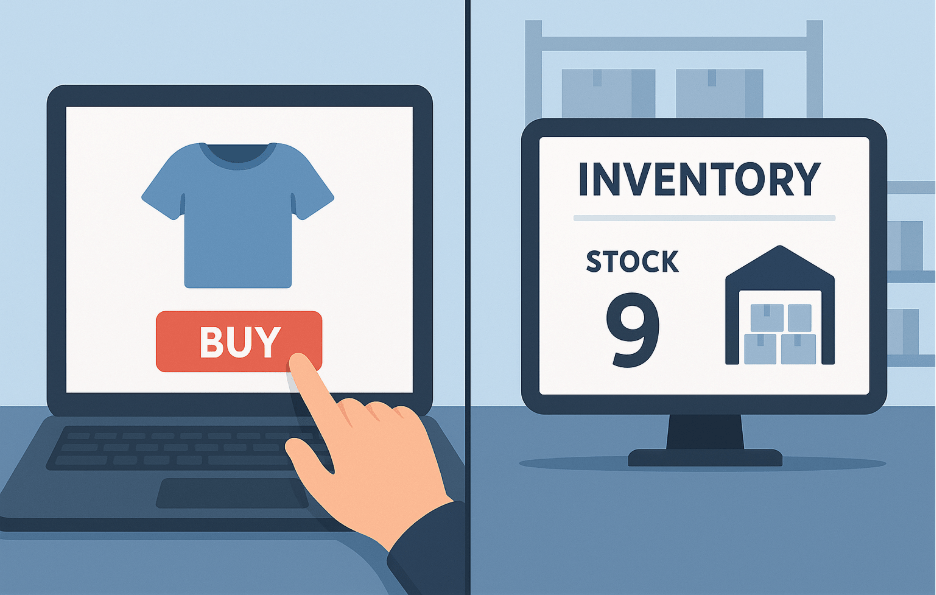
Maintaining accurate inventory is critical when you’re managing raw materials for multiple printing methods. LPrinter Suite tracks blank apparel, inks, transfer films, and other consumables in Real-Time. When print production begins, the system automatically deducts the required materials from inventory. These updates sync instantly across all connected e-commerce platforms, preventing overselling and ensuring accurate inventory levels for customers.
Production Coordination
Your unified system assigns orders to the appropriate production method based on product type and specifications. DTG orders route to direct to garment printers, sublimation jobs go to heat press stations, and embroidery work flows to digitizing and stitching equipment, managed by Printer wise job assignment. Production staff can view their queue, access detailed specifications, and update order status directly in the system. These updates sync back to your ERP and cascade to connected e-commerce platforms, keeping everyone informed of progress.
Order Fulfillment and Shipping
Once print production is complete, your integrated LPrinter Suite system coordinates with shipping carriers through seamless carrier integration. The system generates shipping labels, updates tracking information, and notifies customers automatically. Real-Time tracking updates flow from carriers back through your system to e-commerce platforms, giving customers visibility into their order journey. This transparency reduces customer service inquiries and builds customer satisfaction.
Optimizing Logistics Through Integration
Effective logistics optimization requires coordination between multiple systems and partners. When your LPrinter Suite ERP connects with e-commerce platforms and shipping carriers, you gain powerful capabilities for improving delivery performance.
- Smart Shipping Decisions: An integrated system can automatically select the most cost-effective shipping method based on order weight, dimensions, destination, and delivery timeframe.
- Carrier Performance Tracking: Your unified system tracks carrier performance across all orders, giving you data on delivery times, shipping costs, and service reliability. This helps you make informed decisions about carrier relationships.
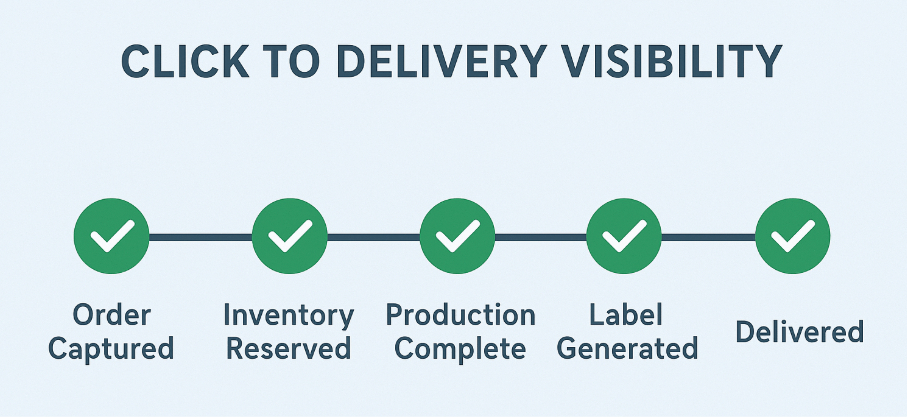
- Click to Delivery Visibility: The true power of e-commerce integration is the ability to trace every order from purchase through delivery. This end-to-end visibility helps you identify bottlenecks, optimize processes, and continuously improve operational efficiency.
Key Features of Effective ERP E-commerce Integration
Not all integrations deliver equal value. The most effective systems, like LPrinter Suite, share several critical characteristics:
- Bidirectional Data Sync: Information flows in both directions: orders come into your LPrinter Suite ERP, while inventory updates, tracking information, and order status changes sync back to platforms.
- Real-Time Updates: Real-Time synchronization ensures inventory levels, order status, and tracking information stay current across all systems.
- Flexible Integration Options: LPrinter Suite supports diverse connections through prebuilt connectors to platforms like Printify, Gelato, Redbubble, Zazzle, and Shopify.
- Automated Workflows: The system handles routine tasks, automatically importing orders, updating inventory, generating shipping labels, and sending customer notifications via Print Job Automation.
- Comprehensive Reporting: Integrated systems generate powerful insights by combining data from multiple sources, allowing you to track profitability by product and monitor fulfillment efficiency.

 Print on Demand Cloud
Leave a comment