
Print on Demand vs Bulk Printing: Which One is Right for Your Business?
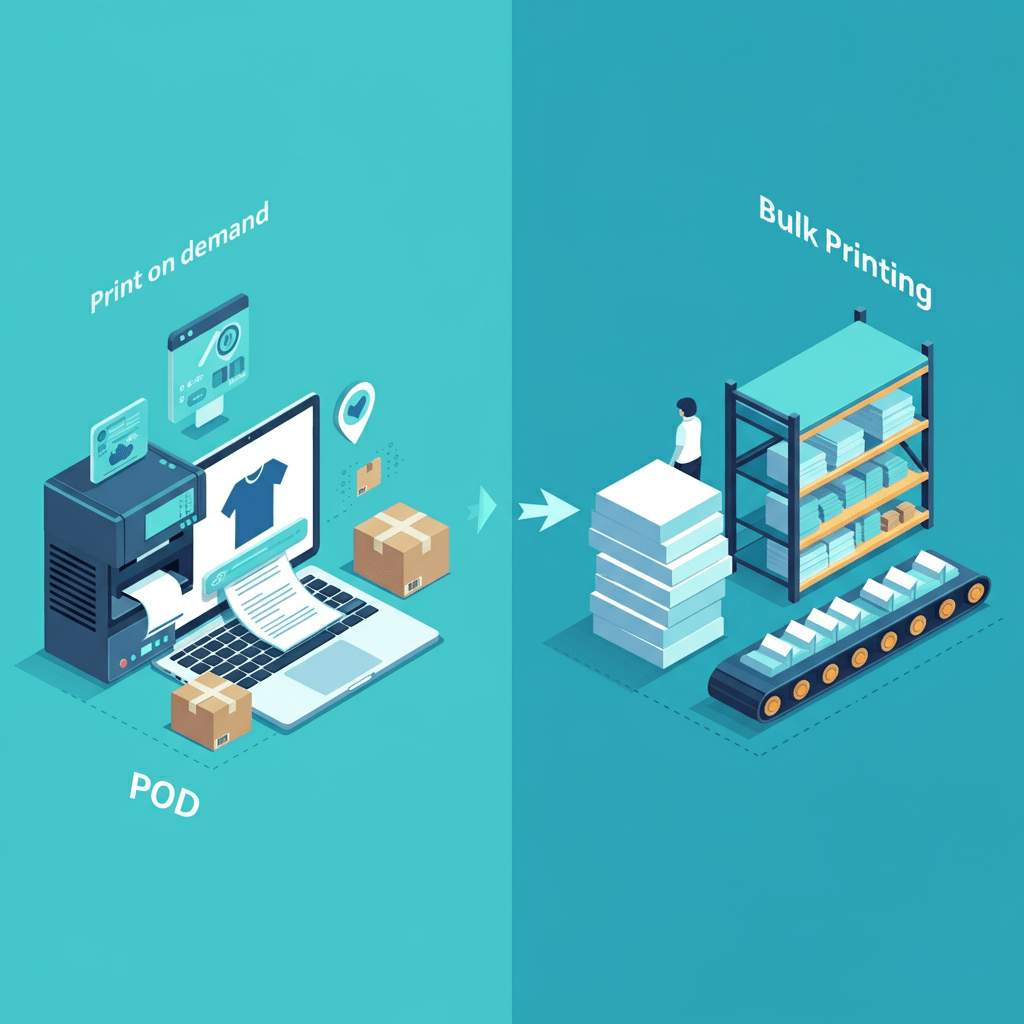
What is Print on Demand (POD)?
Print on Demand allows businesses to print products only when an order is placed. This is done through third-party suppliers who handle everything from printing to shipping.
Pros of Print on Demand:
- Cost Efficiency for Small Runs: Because items are printed per order, there’s no need for a large upfront investment. This is ideal for businesses just starting or testing new products.
- Zero Inventory Management: With POD, there’s no need to store inventory. This eliminates concerns like unsold stock or warehousing costs.
- Customization and Flexibility: POD platforms make it easy to offer personalized items. For instance, a customer can order a t-shirt with their name or a unique design, and it’s printed on demand.
- Low Risk: Since you only pay for products that sell, the financial risk is minimal. POD is especially helpful for entrepreneurs experimenting with new ideas or niche products.
Cons of Print on Demand:
- Higher Production Costs Per Unit: While there’s no initial bulk expense, the price of each item is higher compared to bulk printing.
- Limited Control: Since the printing and shipping are handled by a third party, you might have less say in quality control or delivery speed.
- Longer Fulfillment Times: Customers may face extended wait times since items are printed and shipped after the order is placed.
- Less Suitable for Large Orders: If you suddenly need a high volume of a product (like for a large event), POD may not be the most cost-effective or time-efficient option.
Who Is POD Best For?
- Startups and small businesses testing the market.
- Companies offering customizable products, such as personalized stationery or one-of-a-kind apparel.
- Entrepreneurs with an online store and limited storage space.
What is Bulk Printing?
Bulk printing involves producing a large quantity of items at once, typically at a lower cost per unit. This is a traditional method often used for books, promotional materials, and branded merchandise.
Pros of Bulk Printing:
- Lower Cost Per Unit: By producing products in large volumes, businesses can significantly lower the cost per item, making this approach more affordable for large-scale orders.
- Consistency in Quality: Since bulk printing is often done in one go, you can ensure consistent quality across all products.
- Faster Fulfillment: Once the items are printed, they’re ready for immediate shipping, making bulk printing a faster choice for large or time-sensitive orders.
- Higher Branding Impact: Bulk printing allows for more customizable packaging and professional branding, which can enhance the customer experience.
Cons of Bulk Printing:
- Upfront Investment: Bulk printing requires a significant upfront cost. Businesses must weigh the financial risk of producing products that may not sell.
- Inventory Management: You’ll need storage space for the stock, as well as a system for organizing and shipping orders. Unsold inventory can lead to wastage.
- Limited Flexibility: Once products are printed, you can’t easily make changes. If designs or branding need updating, you may be stuck with outdated stock.
Who Is Bulk Printing Best For?
- Established businesses with a clear understanding of demand and a stable customer base.
- Companies planning large promotional events, like trade shows or conferences, where bulk inventory is necessary.
- Organizations producing items with predictable demand, such as yearly planners or branded uniforms.
POD vs Bulk Printing: A Quick Comparison Table
| Factor | Print on Demand (POD) | Bulk Printing |
|---|---|---|
| Upfront Cost | Low (pay per order) | High (significant initial investment) |
| Per Unit Cost | Higher | Lower |
| Inventory | None required | Requires storage |
| Customization | Highly flexible | Limited after production |
| Scalability | Best for small, individual orders | Cost-effective for large-scale orders |
| Risk | Minimal financial risk | Higher risk of unsold stock |
| Fulfillment Speed | Slower (printed after order placement) | Faster for in-stock items |
How to Decide Which Option Is Right for You
Choosing between Print on Demand and bulk printing comes down to your business needs, resources, and goals. Here are some factors to consider:
- Budget
If you’re just starting out or strapped for cash, POD might be the better choice because it requires less upfront investment. However, if you have capital to invest and anticipate high demand, bulk printing can yield greater savings in the long run. - Product Volume
If you expect to sell a few items a month or focus on unique, customizable designs, POD makes sense. Conversely, if you consistently sell hundreds or thousands of units, bulk printing will save you money in the long term. - Storage Capacity
Lack of storage space is a common concern for small businesses. POD offers a way to operate without a physical inventory. On the other hand, if storage isn’t an issue, bulk printing might work better. - Time-Sensitive Orders
For orders that need rapid delivery, bulk printing is often the faster option because the items are pre-printed and ready to ship. - Risk Tolerance
POD minimizes risk since you only produce what you sell. If you’re launching a new product or entering an untested market, POD gives you a chance to experiment without betting big. - Brand Control
If branding and packaging are essential to your business, bulk printing allows for a more professional presentation. POD, though convenient, can sometimes limit the level of customization available.
Final Thoughts
There’s no one-size-fits-all answer when it comes to choosing between Print on Demand and bulk printing. Startups and niche businesses often benefit from the flexibility of POD, while established companies with steady sales may find bulk printing more cost-effective.
Take stock of your business goals, budget, and operational capacity before making your choice. By weighing the pros and cons, you can align your printing method with your vision and set your business up for success.

 Print on Demand Cloud
Leave a comment